System Introduction
Common Issues in Software Development & Testing
In a modern software project, the development process is often divided among multiple functional teams such as frontend, backend, quality assurance (QA), and system integration. These teams work in parallel to shorten development time and accelerate product release.
However, in practice, this process often encounters several common issues:
-
Backend is not ready
- The frontend team cannot integrate due to missing APIs.
- Time is wasted waiting for backend completion.
- This affects UI development progress and testing capability.
-> Solution: Mock APIs allow frontend teams to work independently and accelerate development.
-
APIs depend on external systems
- Some APIs belong to third-party systems (e.g., banks, partners).
- These APIs cannot be tested easily or have access limitations.
- If external systems fail, the entire testing process is affected.
-> Solution: Mock external APIs to ensure testing autonomy and reduce dependency on external environments.
-
Difficult to test error scenarios (timeout, incorrect data)
- Real APIs are often difficult to simulate under controlled error conditions.
- It's not easy to test edge-case scenarios, such as:
- Invalid JSON schema responses
- Connection timeouts
- ...etc.
-> Solution: Use mock APIs to simulate error responses proactively. This improves test coverage, eases debugging, and enhances test quality.
Solution
To address these issues, Service Visualization was introduced. This is a featured component of the LLQ QA Platform, providing a toolkit that allows users to create mock endpoints that simulate the behavior of real APIs. These endpoints can return static data or simulate error conditions just like real backend systems or external services.
Mock API responses are based on predefined data.
It replaces real APIs during development and testing.
- Objectives:
- Reduce dependency
- Control responses
- Accelerate development
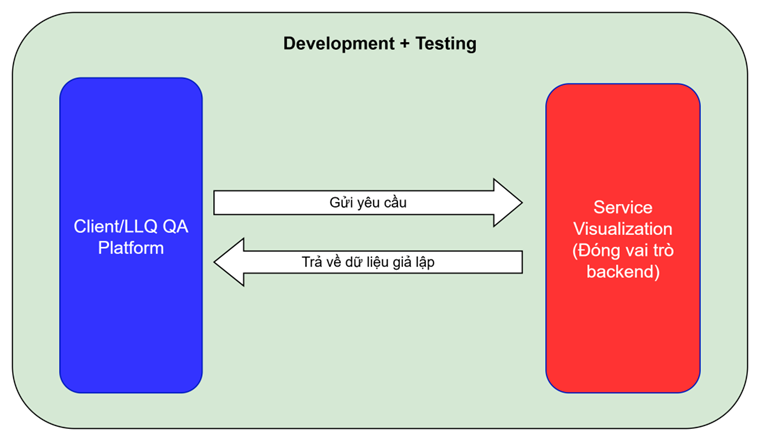
Service Visualization in API Testing
Although mock APIs do not replace real APIs in production environments, they play a crucial role in development and testing stages. Service Visualization fully supports all aspects of working with APIs, including:
-
Creating test scenarios and automated tests even before the backend is ready.
-
Verifying multiple cases: success, failure, timeouts, etc.
-
Isolating the system under test from its dependencies.
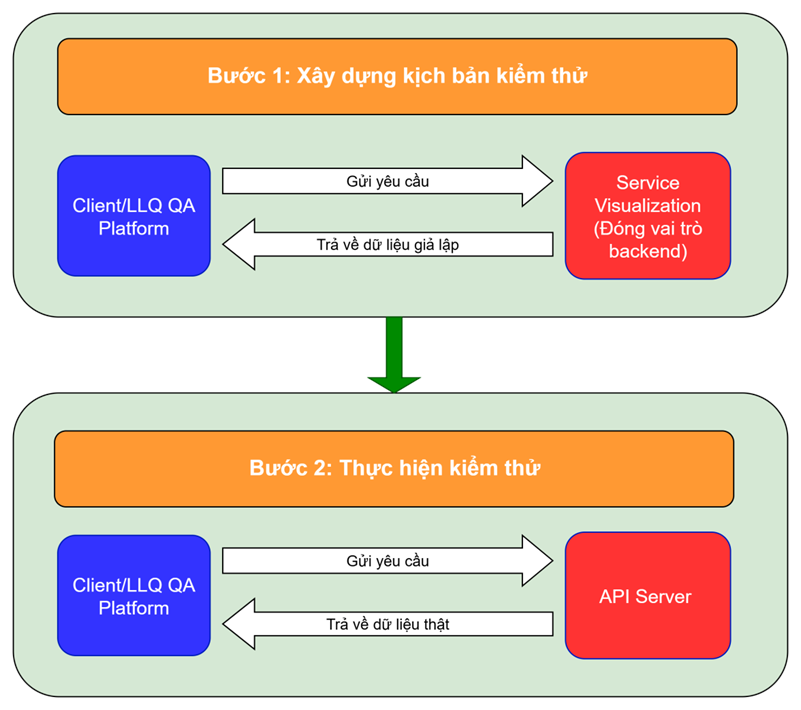
Using Service Visualization helps speed up development, reduce bugs, and establish a consistent workflow – from design to testing.